If you’re a man over 50 and you feel stiff getting out of bed… If tying your shoes takes longer than it used to… If your back, hips, shoulders, or knees feel like they need “warming up” before you can trust them… You’ve probably been told the same thing most men in the UK are …


If you’re a man over 50 and you feel stiff getting out of bed…
If tying your shoes takes longer than it used to…
If your back, hips, shoulders, or knees feel like they need “warming up” before you can trust them…
You’ve probably been told the same thing most men in the UK are told:
“That’s just getting older.”
Here’s the Renovating Dad truth:
It’s rarely age. It’s maintenance.
Most men don’t suddenly lose strength, confidence, or capability in their 50s and 60s. What usually happens is quieter than that. They slowly lose mobility — then try to live, work, and stay active on a body that no longer moves the way it should.
That’s like building a house on poor foundations and expecting everything above it to work properly.
Mobility is the foundation.
And after 50, it becomes the most important physical quality you can rebuild.
Before we talk about lifting weights or “getting stronger”, it’s worth understanding what mobility really is — and why safe strength training for men over 50 depends on it.
What Mobility Actually Means (Not Stretching, Not Rehab)
Mobility is one of the most misunderstood words in fitness — especially for men who’ve never seen themselves as “flexible types”.
Mobility is not:
- Long stretching sessions on the living-room floor
- Rehab exercises you only do after something goes wrong
- Yoga poses that feel awkward or unnecessary
Mobility is:
- The ability to move a joint through its usable range
- With control
- Without pain
- In everyday positions
Good mobility is what lets you:
- Bend down and get back up
- Reach overhead without hesitation
- Turn quickly and confidently
- Walk on uneven ground without thinking about it
When mobility fades, men rarely notice it directly.
Instead, they notice the knock-on effects:
- “My back keeps going.”
- “My knee doesn’t like stairs anymore.”
- “My shoulder’s not right.”
If that sounds familiar, it often links back to the same root problem covered in why men over 50 feel stiff, tired, and slower — not sudden ageing, but years of reduced movement.

Why Strength Training Over 50 Starts With Mobility
This is the part most gyms, classes, and programmes skip.
Strength training matters. It matters a lot! It protects muscle, bone density, and independence. But after 50, strength built on poor mobility doesn’t protect you — it exposes you.
Here’s why.
When a joint doesn’t move properly, your body finds a workaround:
- Tight hips shift stress into the lower back
- Stiff ankles overload the knees
- Limited shoulder mobility dumps strain into elbows and neck
You can still get stronger — but the load ends up in the wrong places.
That’s why so many men say:
“I tried getting fit again and something flared up.”
It’s rarely because strength training is dangerous.
It’s because strength was added onto a frame that hadn’t been straightened first.
Renovation Dad analogy: You wouldn’t add a second storey to a house with cracked foundations.
You stabilise the structure first.
Mobility is that stabilisation phase.
It doesn’t replace strength — it makes safe strength training over 50 possible.
If strength is about staying useful, mobility is what stops you getting hurt along the way.
The 4 Mobility Zones That Matter Most After 50
You don’t need dozens of exercises.
You need to look after the joints that do most of the work in daily life.
Hips (Walking, Stairs, Lifting)
Your hips are the engine room.
When hip mobility drops:
- Walking shortens
- Stairs feel harder
- The lower back picks up extra strain
Shoulders (Reaching, Carrying, Pushing)
Shoulders are designed to move freely.
Loss of shoulder mobility often shows up as:
- Pain reaching overhead
- Difficulty carrying shopping or luggage
- Ongoing neck and upper-back tension
Ankles (Balance, Confidence, Knees)
Ankles are frequently ignored — and hugely important.
Healthy ankle mobility supports:
- Balance
- Knee health
- Confidence on uneven ground
Spine (Rotation and Ease of Movement)
A spine that only bends forwards and backwards becomes fragile.
Rotation matters for:
- Turning quickly
- Reaching
- Catching yourself if you stumble
This is why walking, rucking, and low-impact cardio work so well — they reinforce these mobility zones naturally.
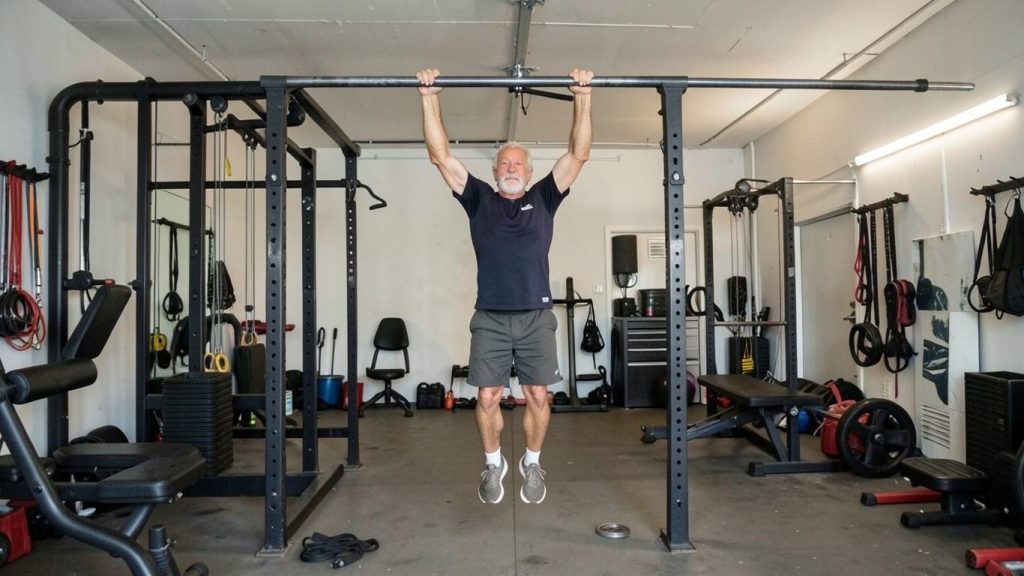
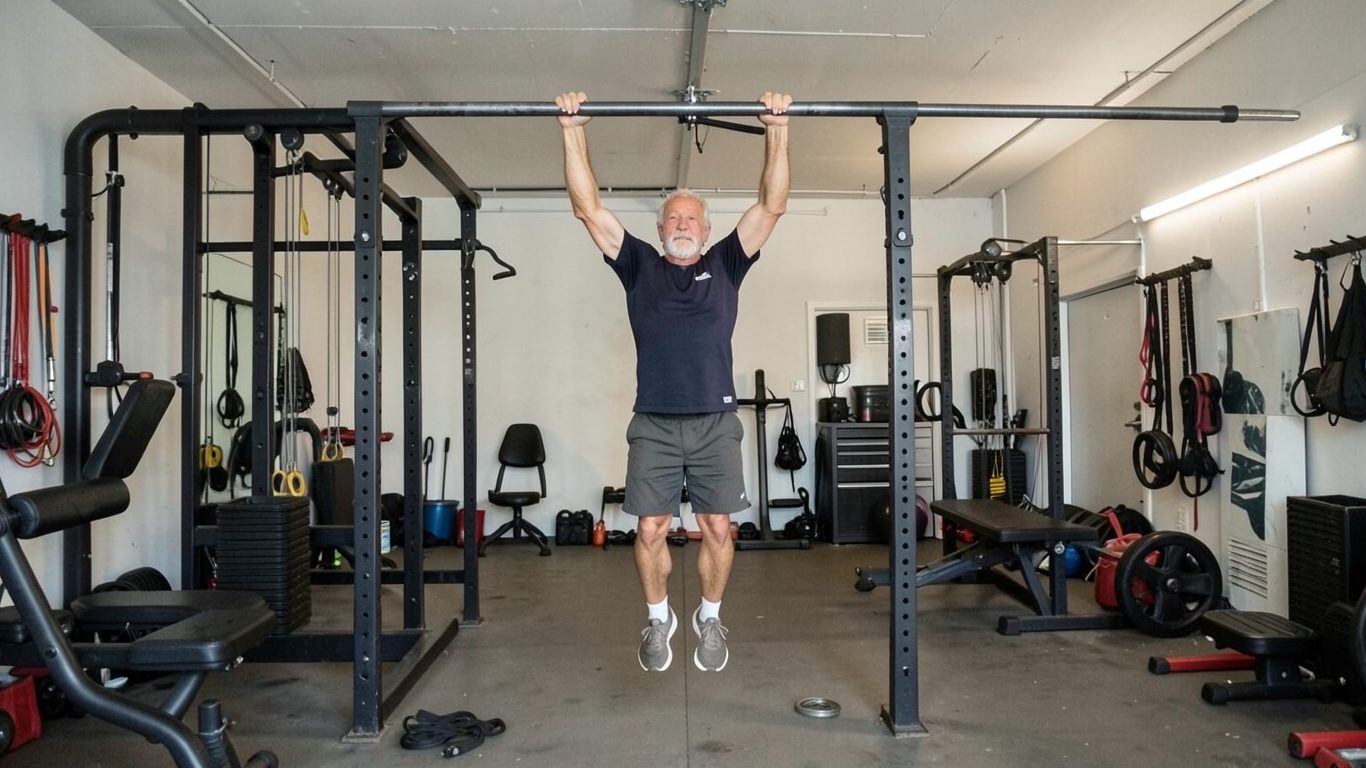
Hanging from a bar has some great mobility benefits. Read Grip Strength as You Age
Mobility After 50 Is a Longevity Skill, Not a Warm-Up
Many men treat mobility like something you do before the real work.
After 50, mobility is real work.
Longevity isn’t about extremes.
It’s about:
- Staying independent
- Staying confident
- Staying capable
Mobility allows you to move without fear and stay active without constant setbacks — which is exactly what longevity training for independence as you age is built on.
A body that moves well lasts longer.
How Mobility Reduces Falls, Tweaks, and Setbacks
Falls aren’t just about balance.
They’re about reaction and range.
When you trip, you need to:
- Step quickly
- Rotate
- Absorb force
That requires mobile hips, ankles, and spine.
Men who maintain mobility don’t just move better — they recover faster from small mistakes.
That’s the quiet confidence behind balance, falls, and staying upright as you age.
How Much Mobility Work Do You Actually Need?
This is where most men are pleasantly surprised.
You don’t need long sessions.
You don’t need sweat.
You don’t need pain.
The Renovating Dad rule:
- Small
- Daily
- Calm
Five to ten minutes a day, done consistently, beats one long session a week.
Mobility responds best to frequency, not force — especially when combined with good sleep and recovery over 50.
Common Mobility Mistakes Men Over 50 Make
A few things to avoid:
Pushing stretches aggressively
Pain isn’t progress.
Chasing flexibility instead of control
Loose joints without strength create instability.
Accepting pain as normal
Pain is information, not something to ignore.
If stiffness and fatigue feel familiar, it’s worth revisiting why men over 50 feel stiff, tired, and slower — the patterns are closely linked.
The Renovating Dad Way to Start
Mobility is the first renovation, not the last.
You don’t need to overhaul your life.
You just need to restore movement — calmly, consistently, and with purpose.
That’s how you protect your joints.
That’s how you make strength safe.
That’s how you stay capable for the years that matter.
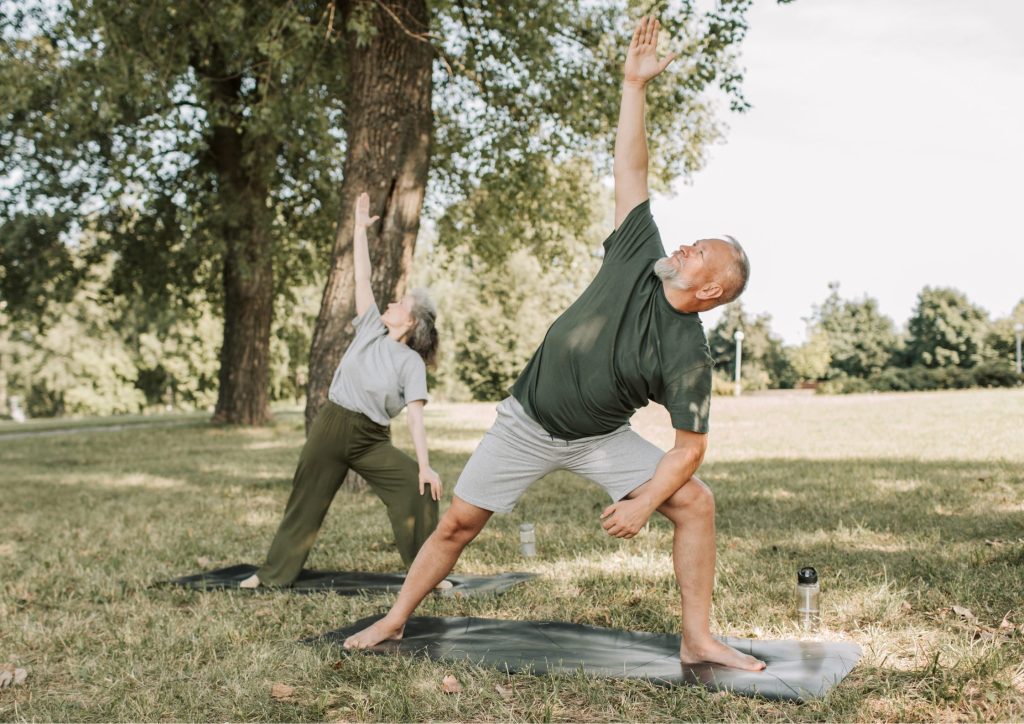
Where This Fits in Your Renovation
This article focused on restoring movement, one of the key systems that keeps the body feeling capable.
Your Next Step
Safe Strength Training for Men Over 50 — add support to new movement
The Tension You Can’t Stretch Away — why tightness isn’t always flexibility
Walking, Rucking & Low Impact Cardio — daily movement maintenance
Renovation Dad Bottom Line
Movement improves when strength, recovery, and stress are addressed together.
And if you want calm, practical guidance each week:

Simple advice to help you stay strong, mobile and involved for the long run.