Falls are one of the biggest threats to independence as we get older. Most men know this — but very few want to talk about it. It feels awkward. Like admitting weakness. So instead, men quietly adapt. They walk more carefully, avoid uneven ground, stop rushing and spend more time sitting. Those adaptations feel sensible. …


Falls are one of the biggest threats to independence as we get older.
Most men know this — but very few want to talk about it.
It feels awkward.
Like admitting weakness.
So instead, men quietly adapt.
They walk more carefully, avoid uneven ground, stop rushing and spend more time sitting.
Those adaptations feel sensible.
But over time, they shrink life.
The Renovating Dad truth is this:
Balance problems don’t begin with clumsiness. They begin with confidence.
And confidence is trainable.
Why Falls Matter More Than We Like to Admit
A fall doesn’t just cause injury.
It changes behaviour.
Men who fall often:
- Move less
- Hesitate more
- Trust their bodies less
That loss of trust accelerates decline.
Which is why longevity training that keeps you independent as you age must include balance — not as a fear topic, but as a confidence skill.
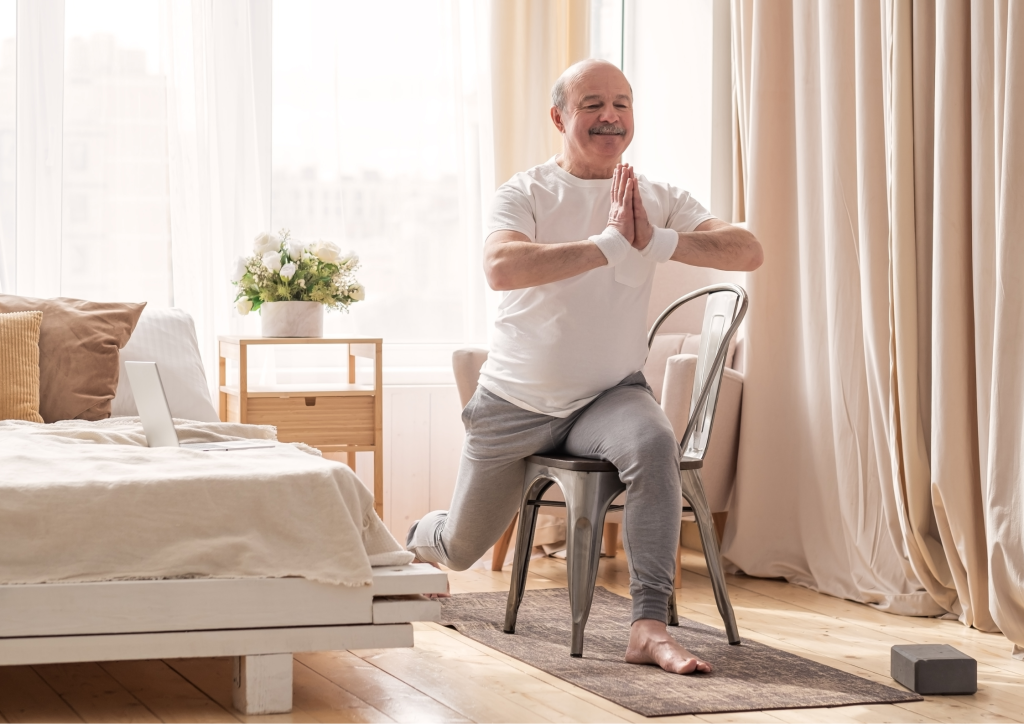
Balance Is Not Just Standing on One Leg
Most balance advice misses the point.
Real-world balance is:
- Stepping quickly
- Turning smoothly
- Reacting under load
- Staying calm when something unexpected happens
That requires more than ankle strength.
It requires:
- Mobile hips
- Strong legs and trunk
- Coordination
- A calm nervous system
This is why balance sits at the intersection of mobility after 50, safe strength training, and walking, rucking, and low-impact cardio.
The Hidden Causes of Balance Loss
Balance rarely disappears overnight.
It erodes quietly through:
- Stiff ankles reducing ground feel
- Weak hips limiting stepping power
- Poor sleep slowing reactions
- Stress keeping the body guarded
These factors are covered across the Renovating Dad pillars:
When these improve, balance often follows.
How Strength Training Protects Balance
Strong legs don’t just lift.
They catch.
Strength training:
- Improves push-off power
- Strengthens stabilising muscles
- Builds confidence under load
This is why safe strength training for men over 50 plays such a big role in fall prevention.
Strength gives you margin.

Walking: Balance Practice in Disguise
Walking is constant balance training.
Every step is a controlled fall.
Regular walking:
- Improves foot awareness
- Reinforces coordination
- Builds rhythm
Add gentle rucking, and you introduce:
- Load tolerance
- Postural control
- Confidence carrying weight
All without high impact.
That’s why walking, rucking, and low-impact cardio are so effective for staying upright.
Confidence Is the Missing Ingredient
Many men have enough strength.
What they lack is trust.
Confidence affects:
- How quickly you react
- How decisively you move
- Whether you freeze or step
Confidence grows through:
- Repeated safe movement
- Gradual challenge
- Absence of setbacks
Which is why balance improves fastest when training is calm and progressive — not aggressive.
Simple Ways to Rebuild Balance After 50
You don’t need complicated drills.
Start with:
- Walking on varied surfaces
- Controlled step-backs and step-throughs
- Slow, deliberate direction changes
- Carrying light loads while walking
All of these reinforce balance naturally — especially when combined with good mobility and strength.
How Sleep and Stress Affect Balance
Reaction time matters.
So does awareness.
Poor sleep and chronic stress:
- Slow reactions
- Reduce coordination
- Increase stiffness
That’s why sleep & recovery and stress, calm & mental fitness are foundational to balance.
A calm, rested body reacts better.
Balance Training Is About Staying Involved
Balance work isn’t about proving anything.
It’s about staying involved in daily life.
Walking confidently.
Moving without hesitation.
Trusting your body again.
That trust supports everything discussed in strength for life: staying capable for your kids and grandchildren.
The Renovating Dad View of Balance
Balance doesn’t leave us, never to return
It’s retained through calm, sensible maintenance.
Because staying upright isn’t about luck.
It’s about preparation.
Where This Fits in Your Renovation
This article focused on stability and safety, key to staying independent.
Your Next Step
Unilateral Training — building balance through strength
Mobility After 50 — improving joint control
Strength for Life — strength reduces fall risk
Renovation Dad Bottom Line
Confidence comes from capability.