Most men over 50 don’t think they have a sleep problem. They think they have a motivation problem. They say things like: In reality, what’s often missing isn’t effort. It’s recovery. Sleep and recovery are the quiet renovations that make every other improvement possible — and without them, even the best plans stall. Why Recovery …

Most men over 50 don’t think they have a sleep problem.
They think they have a motivation problem.
They say things like:
- “I just don’t have the energy anymore.”
- “Training doesn’t seem to work like it used to.”
- “I’m doing the work, but I’m not getting much back.”
In reality, what’s often missing isn’t effort.
It’s recovery.
Sleep and recovery are the quiet renovations that make every other improvement possible — and without them, even the best plans stall.
Why Recovery Matters More After 50
In your 20s and 30s, you could get away with a lot. I did!
Poor sleep. Long days. Short nights. Hard training stacked on top of stress.
After 50, the margins shrink.
That’s not weakness.
That’s biology.
Recovery capacity changes with age, which means:
- Sleep quality matters more than sleep quantity
- Stress affects the body more deeply
- Training adaptations take longer
This is why men often feel stiff, tired, and slower even when they’re “doing everything right.”
Sleep Is Not Passive — It’s Active Repair
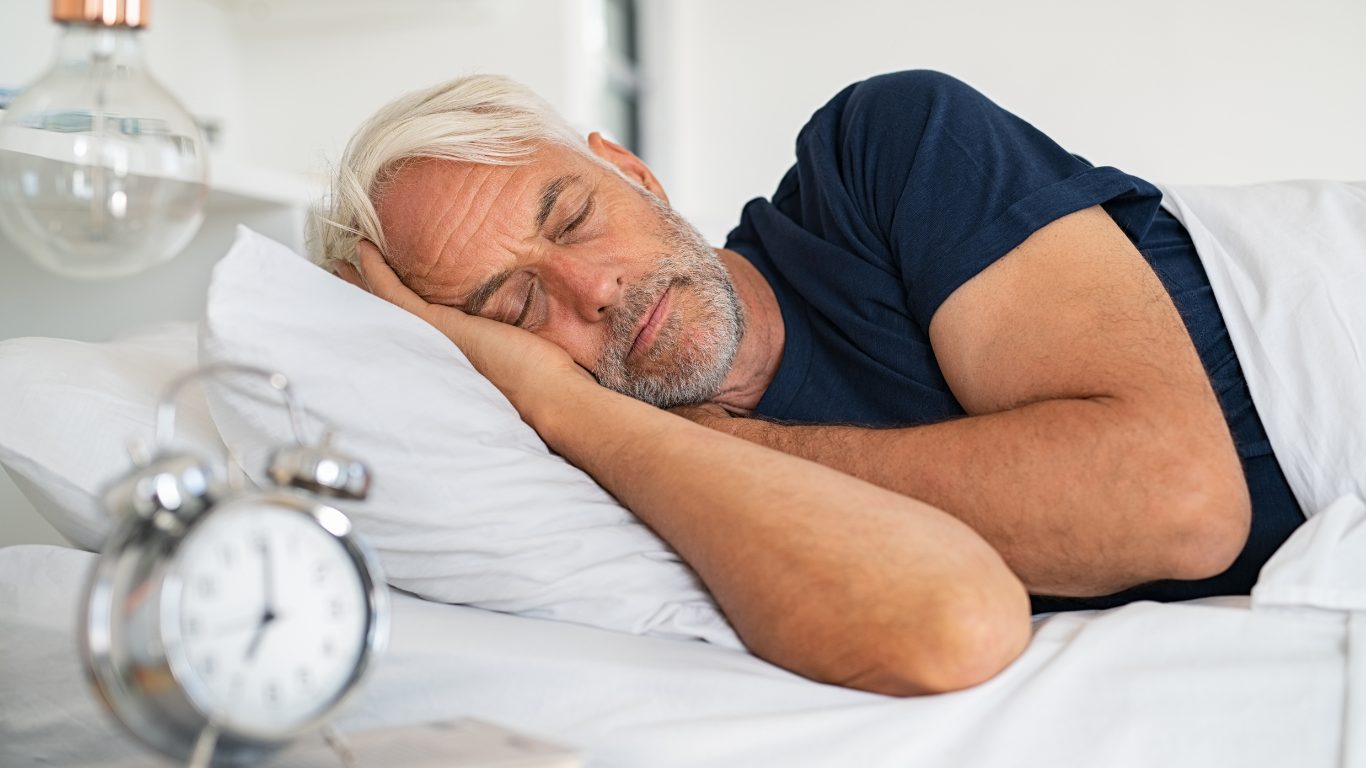
Sleep isn’t just rest.
It’s when the real work happens.
During good sleep:
- Muscles repair
- Joints calm down
- Hormones rebalance
- The nervous system resets
When sleep is poor, the body stays guarded.
That guarded state shows up as:
- Tight hips and shoulders
- Irritable joints
- Slower reactions
- Lower motivation
Which is why sleep quietly underpins mobility, safe strength training, and even balance and confidence.

Why “Just Train Harder” Stops Working
Many men respond to low energy by pushing harder.
They add sessions.
They add intensity.
They remove rest.
That works — briefly.
Then something flares up.
Or sleep gets worse.
Or motivation disappears entirely.
This isn’t a discipline issue.
It’s a recovery mismatch.
Longevity-focused training — the kind that keeps you independent — respects recovery as part of the plan, not something you squeeze in later.
The Signs Recovery Is the Real Issue
You may need to prioritise recovery if:
- You wake feeling stiff most mornings
- Niggles linger longer than they used to
- Energy dips in the afternoon
- Sleep feels light or broken
- Training leaves you drained rather than steady
These signs often show up before injury.
They’re early warnings — not failures.

How Walking Supports Sleep and Recovery
Here’s something many men miss.
Walking isn’t just cardio.
It’s a recovery tool.
Regular walking:
- Lowers baseline stress
- Improves sleep depth
- Encourages natural tiredness at night
- Keeps joints moving without load
That’s why walking, rucking, and low-impact cardio feature so heavily in the Renovating Dad approach.
They help you recover and progress.
Strength, Recovery, and Doing Just Enough
Strength training over 50 works best when it’s:
- Regular
- Moderate
- Repeatable
Not maximal.
Not exhausting.
When strength sessions leave you:
- Upright
- Clear-headed
- Calm
You’re doing it right.
That’s the approach outlined in safe strength training for men over 50.
Stress Is a Recovery Issue (Not a Mindset Flaw)
Poor recovery isn’t always about sleep hours.
Stress plays a huge role.
Work pressure. Family responsibilities. Life transitions.
They all keep the nervous system switched on.
A body that never truly relaxes never fully recovers.
This connection is explored further in stress, calm, and mental fitness for men over 50 — because calm is physical, not just psychological.
Simple Recovery Habits That Actually Work
You don’t need gadgets or supplements to improve recovery.
You need consistency.
A few Renovating Dad basics:
- Regular bed and wake times
- Evening light kept low
- Gentle movement most days
- Walking outdoors when possible
- Avoiding hard sessions late at night
None of this is dramatic.
All of it works.
Recovery Is What Makes Progress Stick
Training only builds potential.
Recovery turns that potential into results.
Better sleep means:
- Mobility improves faster
- Strength feels safer
- Balance improves
- Energy steadies
Which is why recovery is woven into longevity training that keeps you independent as you age.
When men respect recovery early, they avoid the cycle of stop–start fitness that frustrates so many over 50.
The Renovating Dad View of Sleep and Recovery
You don’t renovate a house by hammering all day without stopping.
You plan.
You pace the work.
You let things settle.
Sleep and recovery are how your body settles.
Ignore them, and cracks appear.
Respect them, and everything else improves.
Because the strongest bodies aren’t built by pushing harder.
They’re built by recovering better.
Where This Fits in Your Renovation
This article focused on repair and restoration, the system that allows everything else to work.
Your Next Step
Stress, Calm & Mental Fitness — how stress affects sleep
The Tension You Can’t Stretch Away — nervous system load
Nutrition Basics — recovery starts with fuel

Renovation Dad Bottom Line
You don’t grow stronger during training — you grow stronger during recovery.