(And Why Most Men Miss It Without Realising) If you’re a man over 50 and feeling weaker, slower to recover, or “softer” than you used to — this is one of the biggest reasons. Not lack of effort.Not laziness.Not age. Under-fuelled renovation. Most men are dramatically under-eating protein for the body they now live …

(And Why Most Men Miss It Without Realising)
If you’re a man over 50 and feeling weaker, slower to recover, or “softer” than you used to — this is one of the biggest reasons.
Not lack of effort.
Not laziness.
Not age.
Under-fuelled renovation.
Most men are dramatically under-eating protein for the body they now live in — while still eating like they’re 35.
Let’s fix that.
The Big Protein Myth After 50
Most official guidelines still say:
“0.8g of protein per kg of bodyweight is enough.”
That number was designed to prevent deficiency, not to:
Maintain muscle
Protect joints
Support recovery
Slow ageing
It’s the equivalent of saying:
“As long as the roof hasn’t collapsed, the house is fine.”
After 50, “not collapsing” is not the goal.
Why Protein Needs Increase With Age
Here’s what quietly changes as you get older:
Muscle Becomes Resistant to Protein
Your body becomes less responsive to protein intake — a process called anabolic resistance.
Translation:
- You need more protein to trigger the same repair response you once got from less.
You Lose Muscle Faster Than You Think
From around age 40–50:
Men lose 3–8% of muscle per decade
Faster if inactive, stressed, or under-eating protein
This loss isn’t cosmetic.
It affects:
Balance
Blood sugar control
Bone health
Independence
Recovery Slows Down
Cuts, strains, workouts, bad sleep — all take longer to bounce back from.
Protein is the raw material of repair.
Low protein = slow renovation.

So… How Much Protein Do You Actually Need?
For most healthy men over 50:
1.6–2.0g of protein per kg of bodyweight per day
Let’s make that practical.
Examples:
80kg man → 130–160g protein/day
90kg man → 145–180g protein/day
100kg man → 160–200g protein/day
Yes — that’s much higher than most men expect.
And no — it doesn’t mean eating like a bodybuilder.
Why Most Men Miss It (Even the “Healthy” Ones)
Reason 1: Breakfast Is Protein-Free
Toast. Cereal. Croissant. Jam.
That’s carbs with almost no building material.
You start the day with:
No muscle signal
No repair stimulus
Blood sugar swings
Reason 2: Protein Is All Saved for Dinner
One decent evening meal does not compensate for:
Low protein breakfast
Low protein lunch
Older bodies need repeated signals, not one big hit.
Reason 3: Appetite Drops With Age
Men often eat less overall after 50 — without increasing protein density.
Result:
Calories might be “reasonable”
Protein is still too low
Reason 4: Fear of “Too Much Protein”
Many men worry protein will:
Damage kidneys
Cause weight gain
For healthy adults, this fear is outdated.
Muscle loss is the far bigger risk.
The Renovation Dad Protein Target (Simple Version)
Forget daily totals for a moment.
Think in per-meal targets.
30–45g of protein per meal
2–3 meals per day
This matters because:
Muscle repair switches on at ~30g protein
Leucine (the key amino acid) must hit a threshold
Snacking your way to protein doesn’t work well after 50.
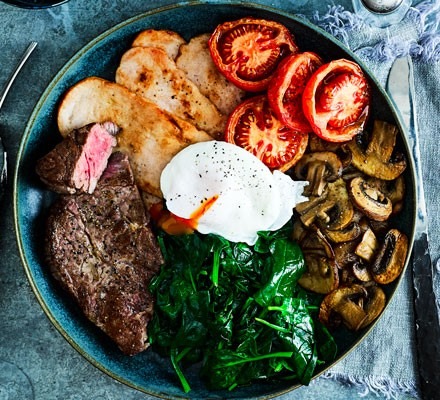
What 30–45g of Protein Actually Looks Like
Here’s where men get surprised.
Animal Sources:
3–4 eggs → ~20–28g
Chicken breast (150–180g) → ~35–45g
Steak (170g) → ~40g
Salmon fillet → ~35–40g
Greek yoghurt + whey scoop → ~40–45g
Plant Sources (Harder, But Possible):
Lentils (large bowl) → ~18–20g
Beans + grains combined → ~20–25g
Tofu/tempeh → ~20–30g
Plant eaters usually need larger portions and careful combinations.
Protein and Strength Training: The Lock & Key
Protein without movement is wasted potential.
Movement without protein is under-supplied labour.
After 50:
Strength training 2–3x/week
Protein intake around training
= muscle preserved, joints protected, confidence restored
This is why men who “walk loads” but don’t lift and don’t eat protein still feel weaker.
What Happens When You Finally Eat Enough Protein
Men often report:
Better recovery
Less joint ache
Improved posture
Better sleep
Easier fat loss
More energy between meals
Not magic.
Just proper maintenance.
Protein Isn’t About Looking Jacked
Let’s be clear.
This isn’t about:
Six-packs
Bulking
Gym culture
It’s about:
Getting off the floor
Carrying shopping
Playing with kids & grandkids
Staying independent
Avoiding the slow shrink
That’s Renovation Dad strength.
The Bigger Renovation Lesson
If your house developed cracks, you wouldn’t say:
“Well, I’ll just stop using the stairs.”
You’d reinforce the structure.
After 50, protein is structural reinforcement. Not glamorous.
Not trendy.
But absolutely essential.
Where This Fits in Your Renovation
This article explained how nutrition supports strength and recovery.
Your Next Step
Nutrition Basics — the full picture
Strength for Life — why protein matters for muscle
Sleep & Recovery — repair depends on fuel
Renovation Dad Bottom Line
Protein isn’t just for muscle — it’s for resilience.