A simple routine to reduce guarding and help your hips actually relax. If you’ve tried stretching your hips and felt no change, discomfort and tightness returning quickly. You’re not alone. The issue usually isn’t flexibility.It’s muscle tone driven by the nervous system. Trying to stretch a muscle that feels unsafe to relax is like: trying …

A simple routine to reduce guarding and help your hips actually relax.
If you’ve tried stretching your hips and felt no change, discomfort and tightness returning quickly.
You’re not alone.
The issue usually isn’t flexibility.
It’s muscle tone driven by the nervous system.
Trying to stretch a muscle that feels unsafe to relax is like:
trying to loosen a bolt while it’s still under pressure
You need to reduce the pressure first.
Your Psoas Isn’t Tight — It’s Guarding
What “Calming the Psoas” Really Means
You’re not relaxing the muscle directly.
You’re:
- reducing nervous system alertness
- improving breathing
- improving support from surrounding muscles
- giving the body a sense of safety
When those signals are present, the psoas naturally reduces tone.
THE 10-MINUTE PSOAS CALMING ROUTINE
Do this before stretching or strength training.
Supported Rest Position — 2 minutes
Lie on your back with:
- knees bent
- feet flat
- arms relaxed
Let your lower back rest naturally.
Focus on slow, easy breathing.
This reduces protective muscle tone.
Slow Nasal Breathing — 2 minutes
Inhale through the nose.
Long, relaxed exhale.
No forcing.
Think:
slow and quiet
Longer exhales activate the body’s calming response.
Gentle Pelvic Rocking — 2 minutes
Small tilts of the pelvis.
Back and forth.
Slow and smooth.
No effort.
This reintroduces movement without threat.
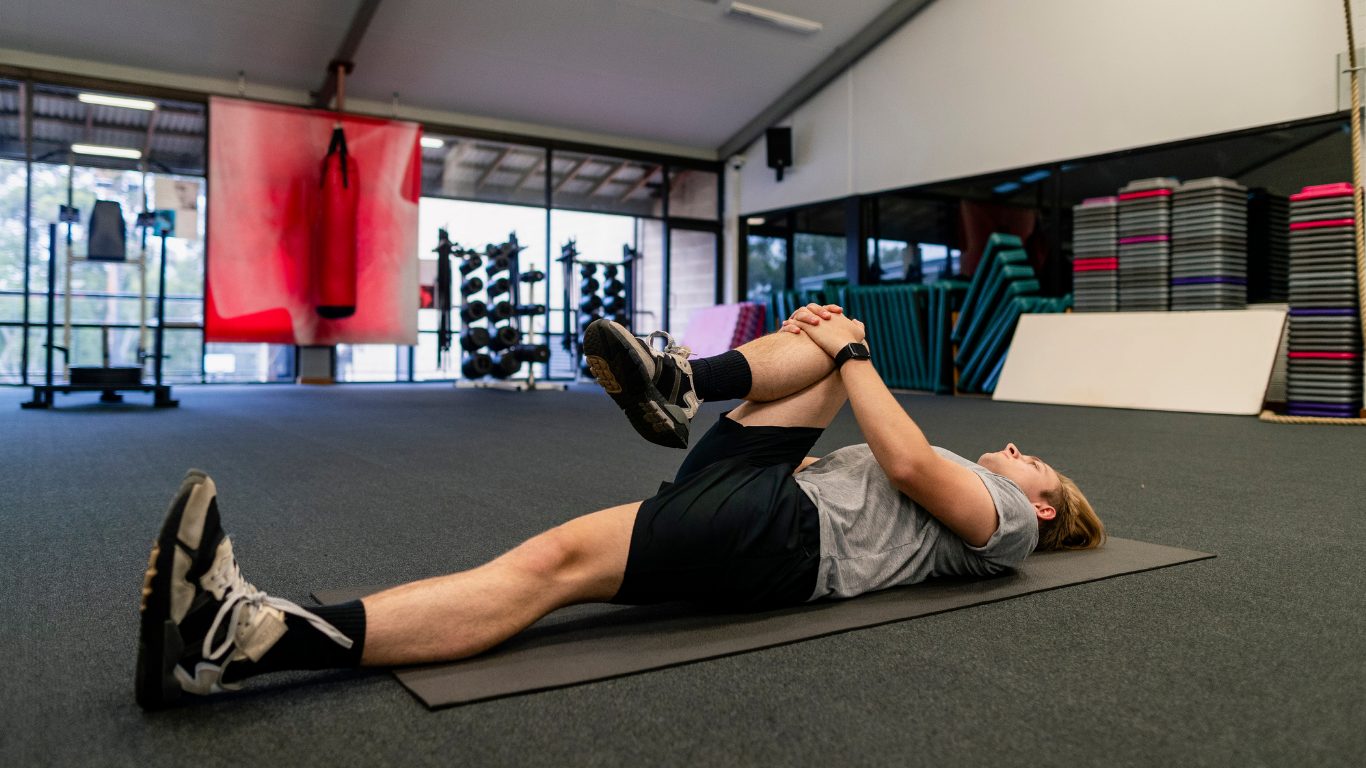
Knee-to-Chest Alternating — 2 minutes
Bring one knee in gently.
Switch sides.
No pulling or forcing.
Just movement.
Short Walk — 2 minutes
A slow walk around the room or outside.
Natural arm swing.
Relaxed pace.
Rhythmic movement tells the nervous system:
“We’re safe.”
Walking, Rucking & Low Impact Cardio
Now You Can Stretch (If You Still Need To)
After this routine:
- stretching feels easier
- range improves naturally
- less resistance
Often, you’ll find you don’t need much stretching at all.
Because the body has already let go.
Why This Works
This routine addresses the real drivers of guarding:
breathing
nervous system tone
movement confidence
stability
Instead of forcing length, you remove the need for protection.
When to Use This Routine
This works well:
- before workouts
- after long sitting
- when hips feel tight
- before mobility work
- before bed
Consistency matters more than intensity.
Common Mistakes to Avoid
Stretching aggressively first
Holding painful positions
Rushing the process
Trying to “force release”
Calming works because it’s gentle.
What Improvements Feel Like
Over time, you may notice:
- less hip tightness
- easier walking
- less low back tension
- smoother movement
- better posture
These changes usually happen gradually — but reliably.
The Bigger Picture
Calming the psoas isn’t just about hips.
It improves:
- movement
- comfort
- breathing
- energy
- confidence
Because you’re improving how the body regulates tension.
The Tension You Can’t Stretch Away
Where to Go Next
If this routine helped, continue here:
Why Stretching Isn’t Fixing Your Tightness — understanding protective tone
Recovery After 50 — reducing fatigue-related tension
Mobility After 50 — building movement confidence
Safe Strength Training for Men Over 50 — adding support
Renovation Dad Bottom Line
You don’t stretch a muscle into relaxation.
You create the conditions for it.
Reduce pressure.
Improve support.
Then move freely.