The long-term renovation plan for strength, fitness and independence. If you were renovating a house you planned to live in for the next 20 or 30 years, you wouldn’t just paint the walls and hope for the best. You would look at the important stuff. The foundations. The framework. The roof. The electrics and plumbing. …

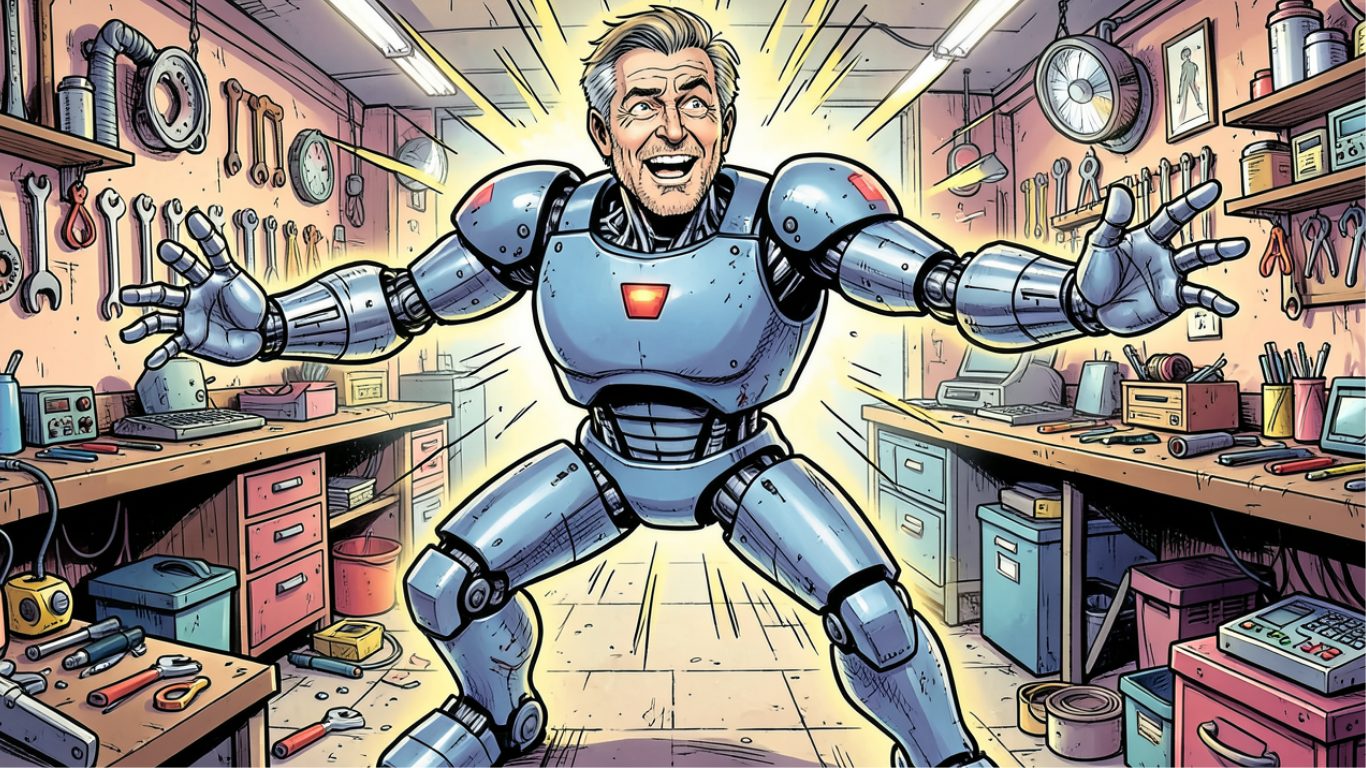
The long-term renovation plan for strength, fitness and independence.
If you were renovating a house you planned to live in for the next 20 or 30 years, you wouldn’t just paint the walls and hope for the best.
You would look at the important stuff.
The foundations.
The framework.
The roof.
The electrics and plumbing.
And then you would maintain the whole thing properly.
Your body is no different.
The goal after 50 shouldn’t simply be to look fitter for the next few months.
It should be to build a body that still works when you are 60, 70 and beyond.
Strong enough to carry things.
Fit enough to climb hills.
Mobile enough to get down on the floor and back up.
Resilient enough to keep doing the things you enjoy.
That is what healthy ageing should really mean.
For the full Renovating Dad framework, read The Big Picture: How All Five Systems Work Together.
THE FIVE PARTS OF A BODY BUILT TO LAST
THE FOUNDATION — MOVEMENT & MOBILITY
Every good house starts with solid foundations.
For your body, that means movement and mobility.
If you cannot comfortably bend, reach, rotate, squat or get yourself off the floor, everything else becomes harder.
Good movement gives you options.
It helps you train.
It helps you stay active.
And it helps you keep doing normal everyday things without having to think about them.
Mobility isn’t about becoming incredibly flexible.
It is about maintaining enough usable movement to live your life.
For practical guidance, see Mobility After 50 and THE 10-MINUTE DAILY MOVEMENT RESET.
THE FRAMEWORK — STRENGTH & MUSCLE
Once the foundations are solid, you need a strong structure.
Your strength and muscle are the framework of the house.
Muscle helps you:
- lift and carry
- climb stairs
- protect your joints
- maintain balance
- recover from setbacks
- stay physically independent
And losing strength isn’t something that suddenly happens at 70.
It can creep up gradually for decades if you don’t do something about it.
Strength training is therefore not just about building bigger muscles.
It is about keeping the structure strong enough to support the life you want to live.
Read The Role of Muscle in Healthspan.
THE ROOF — CARDIOVASCULAR FITNESS
A strong house still needs a roof.
Your cardiovascular fitness is the engine that allows the rest of the body to keep working.
You don’t need to become an endurance athlete.
But you should be able to walk, climb, travel, work and take on challenges without feeling as though your engine is constantly running out of steam.
Walking, cycling, swimming, running, rowing and rucking can all play a part.
The exact method matters less than keeping the system working.
For more, see Walking, Rucking & Low-Impact Cardio.
THE ELECTRICAL & PLUMBING — NERVOUS SYSTEM, HORMONES & STRESS
A house can look solid from the outside while the internal systems are struggling.
Your body is much the same.
Stress, nervous-system regulation and hormonal changes influence how well you sleep, recover, train and feel.
Chronic stress can show up physically as poor sleep, fatigue, tension and reduced recovery.
That doesn’t mean every problem can be blamed on hormones or the nervous system.
It means these systems are part of the bigger picture.
Read The Hidden Load: How Stress Shows Up Physically and THE VAGUS NERVE EXPLAINED – SIMPLY.
MAINTENANCE — RECOVERY, SLEEP & NUTRITION
Even the best-built house deteriorates without maintenance.
Your body does too.
Training provides the stimulus.
Recovery is where you actually adapt.
That means paying attention to:
- sleep
- nutrition
- protein
- rest
- recovery between harder sessions
- managing your overall workload
You don’t need a perfect diet or an elaborate recovery routine.
But you do need to give your body what it needs to repair itself.
See RECOVERY AFTER 50 and SLEEP AFTER 50: WHY IT CHANGES AND WHAT HELPS.
CONSISTENCY HOLDS THE WHOLE THING TOGETHER
You can have the perfect training programme on paper and still get nowhere if you only follow it occasionally.
The real work is much less exciting.
A couple of strength sessions.
Regular walking or cardiovascular work.
Some movement.
Enough sleep.
Decent food.
Repeated week after week.
That doesn’t look spectacular on Instagram.
But over ten or twenty years, it matters enormously.
For a simple structure, see THE WEEKLY ROUTINE THAT KEEPS YOU FIT FOR LIFE.
WHAT ARE YOU ACTUALLY BUILDING FOR?
This is the question that matters.
You aren’t building fitness simply so you can say you are fit.
You are building capability.
The ability to:
- get yourself off the floor
- carry your own bags
- climb a flight of stairs
- walk around a city all day
- play with your children or grandchildren
- go hiking
- learn something new
- take on a challenge
- remain useful and independent
Living longer is useful.
But living longer while steadily losing the ability to do things isn’t the goal.
The goal is more capable years.
STOP TRYING TO BE 30 AGAIN
One of the worst approaches to training after 50 is trying to recreate the body you had decades ago.
That isn’t the target.
The better question is:
What do I want my body to be capable of in ten, twenty or thirty years?
Then work backwards.
Focus on:
- strength
- movement
- fitness
- resilience
- consistency
- capability
Worry less about:
- perfection
- extreme workouts
- quick fixes
- constantly comparing yourself with your younger self
You are not trying to turn the clock backwards.
You are trying to make sure the future version of you still works.
THINK IN DECADES, NOT WEEKS
A house built to last isn’t renovated in one weekend.
Neither is your body.
You test it.
You identify what needs work.
You improve it.
You test again.
Then you use the capability you have built.
That is the Renovating Dad process:
MEASURE → RENOVATE → RETEST → CHALLENGE
Or even more simply:
TEST THE BODY. BUILD THE HOUSE. USE IT.
Small improvements made consistently after 50 can have a huge effect on what you are capable of later.
You don’t need to become exceptional at everything.
You just don’t want any important part of the house falling apart.
RENOVATING DAD BOTTOM LINE
If you want your body to support you into your 70s and beyond, build the whole house.
Foundation: Movement & Mobility
Framework: Strength & Muscle
Roof: Cardiovascular Fitness
Electrical & Plumbing: Nervous System, Hormones & Stress
Maintenance: Recovery, Sleep & Nutrition
Don’t wait until something stops working before you start looking after it.
Test the body. Build the house. Use it.
The goal isn’t simply to live longer.
It’s to stay capable for as long as possible.
WHERE TO GO NEXT
THE BIG PICTURE: HOW ALL FIVE SYSTEMS WORK TOGETHER— understand the complete framework
Mobility After 50: The Real Fountain of Strength and Longevity — strengthen the foundations
Strength for Life — build the framework
Walking, Rucking & Low-Impact Cardio for Lifelong Fitness — improve the roof
RECOVERY AFTER 50 — maintain the whole structure
THE WEEKLY ROUTINE THAT KEEPS YOU FIT FOR LIFE — put everything together